Category

Agriculture

Category

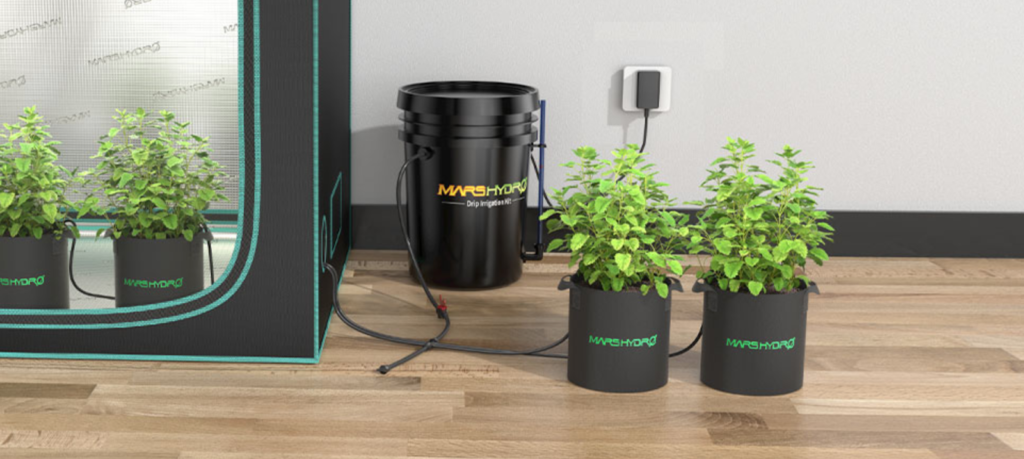
Drip irrigation is a process that involves delivering water directly to the root zone of plants, thereby minimizing water loss due to evaporation and runoff. This method is known for its water conservation benefits and has gained popularity in various agricultural and gardening practices. The use of a drip irrigation kit plays a significant role in the successful implementation of this technique. These kits consist of tubing with built-in emitters that release water slowly and evenly to the plants.

Types of plants grows under drip irrigation system

Some of the common types of plants that grow well under a drip irrigation system include vegetables, flowers, and fruit trees. These plants thrive under the consistent and precise delivery of water provided by the drip irrigation method. Vegetables such as tomatoes, peppers, and lettuce benefit from the moisture being delivered directly to their roots, resulting in healthier and more productive plants. Flowers like roses, petunias, and marigolds also flourish under drip irrigation, as the controlled watering prevents excessive moisture on their foliage, reducing the risk of disease.

Steps to setup a drip irrigation 

Setting up a drip irrigation kit inside a grow tent requires careful planning and attention to detail. The first step is to determine the layout of the tent and the placement of the plants. This will help in determining the length of tubing needed and the number of emitters required. Next, the tubing can be installed by connecting it to a water source and running it along the rows of plants.

Drip irrigation kits from Mars Hydro are designed to provide efficient and effective water delivery to plants. These kits come equipped with high-quality tubing and emitters that ensure a precise and controlled flow of water. By using these kits, gardeners and farmers can maximize water conservation efforts while still providing adequate hydration to their crops. The functionality and durability of Mars Hydro’s drip irrigation kits make them an excellent choice for anyone looking to implement a water-saving solution in their agricultural or gardening practices.

Mars Hydro also offers grow tent kits that are specifically designed to accommodate the setup of drip irrigation kits inside them. These grow tent kits come with an inline fan that ensures proper ventilation and airflow, creating an ideal environment for plants to thrive. By combining the drip irrigation system with the grow tent kit, gardeners can create a controlled and optimized growing space that maximizes water efficiency and plant health. This integrated solution allows for easy installation and management of both the irrigation and growing systems, making it convenient for both novice and experienced gardeners.

Conclusion

In conclusion, the use of a drip irrigation kit is essential for water conservation in agricultural and gardening practices. By delivering water directly to the root zone of plants, drip irrigation minimizes water loss due to evaporation and runoff. Various types of plants, including vegetables, flowers, and fruit trees, benefit from the consistent and precise delivery of water provided by this method. Furthermore, setting up a drip irrigation system inside a grow tent from Mars Hydro requires careful planning and attention to detail.

Here is the informative guide to use coco peat  in garden.Coco peat suppliers are an important part of the horticulture industry, providing growers and gardeners with a high-quality and sustainable growing medium

Methods of Using Coco Peat in Garden

Soil amendment: Coco peat can be mixed into the soil to improve its moisture-holding capacity and aeration. This is especially beneficial for sandy soils that tend to dry out quickly. Mixing coco peat into the soil helps to retain moisture in the soil and also helps to improve soil structure.

Potting mix: Coco peat block can be used as a component of a potting mix to provide plants with a well-draining and moisture-retentive growing medium. By adding coco peat to potting mix, it helps to improve drainage, and also helps to retain moisture in the soil. This is especially beneficial for container gardening..

Hydroponics: Coco peat can be used as a growing medium in hydroponic systems, where it can provide the plants with the necessary moisture and nutrients. It is a good option for hydroponic growing as it has a good capacity to absorb and retain nutrients. Coco peat block price was a great deal, making it a cost-effective way to improve the growing conditions for my transplants.

Soilless culture: Coco peat can be used to grow plants in soilless culture, such as in coco peat or rockwool. This method is useful for commercial growers or for those who want to grow plants indoors. Soilless culture is a method of growing plants without the use of soil, and coco peat is an ideal growing medium for this method.

Mulch: Coco peat can be spread on top of the soil as a mulch to help retain moisture and suppress weed growth. By spreading coco peat on top of the soil, it helps to retain moisture in the soil and also helps to suppress weed growth.

Composting: Coco peat is biodegradable, it can be added to a compost pile to increase the organic matter content and improve the structure of the soil. By adding coco peat to a compost pile, it helps to improve the structure of the soil and also helps to increase the organic matter content in the soil.

Proven Benefits of Using Coco Peat in Garden

Coco peat has a high water-holding capacity and provides excellent drainage and aeration for roots. This helps to prevent waterlogging and promotes healthy root growth. Research has shown that plants grown in coco peat have better root development than those grown in soil or other growing media.

Coco peat, also known as coir pith or coco coir, is a byproduct of the coconut industry. It is made from the fibers of the coconut husk and is often used as a soil amendment or growing medium in horticulture. The use of coco peat as a soil amendment has been gaining popularity in recent years due to its many benefits, which have been proven in research.

The high porosity of coco peat allows it to hold large amounts of water, making it an ideal growing medium for plants that require high levels of moisture. This is particularly useful for plants that are grown in arid or semi-arid regions, where water is scarce. Additionally, coco peat can help to reduce the frequency of watering, as the water is retained in the soil for longer periods of time.

Coco peat also has excellent aeration properties. The fibers in coco peat provide a structure that allows for the free flow of air, which is essential for the growth of roots. This improved aeration helps to promote strong, healthy root growth, which is vital for the overall health and development of plants. The high level of air porosity in coco peat also helps to reduce the risk of anaerobic conditions, which can be harmful to plants.

Another benefit of coco peat is its ability to reduce erosion. The fibers in coco peat help to bind the soil together, which can help to prevent erosion caused by water and wind. This is particularly useful in areas that are prone to heavy rainfall or high winds, as the soil is less likely to be washed away. Additionally, coco peat can help to reduce the loss of nutrients from the soil, as it helps to keep the soil in place.

In addition to these benefits, coco peat is also an effective alternative to peat moss. Peat moss is a non-renewable resource that is often harvested unsustainably, leading to the destruction of peat bogs and other ecosystems. Coco peat, on the other hand, is a renewable resource that can be produced sustainably. This makes it a more environmentally friendly option for horticulturists and gardeners..

Research has also shown that coco peat can be used as a substrate for growing mushrooms. Coco peat has been found to be an ideal growing medium for mushrooms because it provides the necessary conditions for the growth of mycelium. It is also easy to sterilize, which is essential for the cultivation of mushrooms.

In conclusion, coco peat has been proven to have many benefits for plants and it is an effective alternative to peat moss. Its ability to retain water, improve aeration, reduce erosion, and promote strong root growth makes it an ideal growing medium for a wide variety of plants. Additionally, its sustainability and ease of use make it a popular choice among horticulturists and gardeners. The versatility of coco peat makes it also suitable for hydroponics and mushroom cultivation.

The way agricultural methods are improving, new research suggests that it needs to continue to develop. For instance, PwC has reported on expert views that agricultural consumption will need to increase by close to 70 per cent by 2050 to account for the world’s growing population — projected to hit 9 billion people in the same year. While not as high, the World Bank has predicted that those across the globe will need to produce 50 per cent more food by 2050 should global population continue to rise at its current pace.

With technology constantly improving, this has been very beneficial to those in the agriculture industry. Two main areas of interest are that of drones and autonomous vehicles — this guide sets out how each could assist farmers in the future. Farm insurance from a leading insurance broker like Lycetts, will be able to give land owners and farmers peace of mind when protecting their gadgets.

Drones on the farm

Gadgets like drones are expected to have sales of over £4.8 million in 2017 – this is an increase of 34%. US technology research experts Gartner has also predicted that drone production figures will jump by 39 per cent this year compared to the numbers recorded in 2016.

These gadgets offer many different benefits such as:

Using them for planting

Looking after plants and produce can be stressful, especially if you have a lot to look after. Drones can take away that stress, and new starter companies can achieve an uptake on 75% and reduce the costs of planting by as much as 85%. The idea is that the technology sees drones shooting pods with seeds as well as plant nutrients into the soil, enabling plants to receive the nutrients they need to sustain life.

Making the most of irrigation

Water can be wasted around the farm, and this can be expensive. Drones can help avoid this problem with sensor equipment. Think multispectral, hyperspectral or thermal sensing systems. The idea is that the technology will quickly and easily identify the driest sections of a field and then allow farmers to allocate their water resources more economically.

Spray your crops!

Those in this industry will know the methods of crop spraying and monitoring. However, drones can improve both common practices.

Drones are becoming more common in businesses. In regard to crop spraying, drones can effectively scan the ground of a farm and then spray the correct amount of liquid once the distance from the ground has been modulated — even coverage will be achieved while the amount of chemicals penetrated into groundwater will be reduced.

Drones will be able to detect any problems with a crop, but will also be able to show how things are developing. These kinds of insights would have previously only been gained by satellite imagery — while very advanced, this technique could only be used once a day. Monitoring through drones can be used whenever a farmer wishes.

Vehicles for the farm are changing

Vehicles with autonomous abilities have a growing market. In fact, a comprehensive report by Business Insider Intelligence has forecasted that there will be close to 10 million cars available which will have either semi-autonomous or fully autonomous capabilities. From a more general perspective, management consulting firm Bain has estimated that the global opportunity for assistive and autonomous technologies for the business-to-business market will be somewhere in the range of $22 to $26 billion per year by 2025.

There have already been presentations on how these types of vehicles can help those working in the agricultural industry. For instance, a team of agricultural engineers from the Harper Adams University in Shropshire have set about creating an autonomous tractor which can perform tasks like the drilling, seeding and spraying of land while being steered by a farmer who is positioned not behind the vehicle’s wheel but in a control room. The same team — made up of Johnathan Gill, Kit Franklin and Martin Abell — are also looking into how an automated combine harvester can be used to then harvest the same field.

“These small autonomous machines will in turn facilitate high resolution precision farming, where different areas of the field, and possibly even individual plants can be treated separately, optimising and potentially reducing inputs being used in field agriculture.

“The tractor driver won’t be physically in the tractor driving up and down a field. Instead, they will be a fleet manager and agricultural analysts, looking after a number of farming robots and meticulously monitoring the development of their crops.” Mr Franklin told the Daily Mail when asked about the benefits.

A vine pruning robot has been invented by Christophe Millot. Developed as a counter to a shortage in farm labour, the latest-generation model of the four-wheeled gadget is made up of six cameras, two arms and a tablet computer found inside the robot. These features combine in a way that the machine can learn as it goes about its task so to trim grass around each vine with a cut every five seconds.

Insuring your farming equipment

Investing in your craft is vital when it comes to agriculture. No matter if you choose to invest in farming drones and autonomous farm vehicles, or continue with tried-and-tested techniques in agriculture, it is important to ensure that the equipment is insured to avoid unexpected surprises from costing landowners and farmers dearly.

Sources:

https://www.technologyreview.com/s/601935/six-ways-drones-are-revolutionizing-agriculture/

http://www.bbc.co.uk/news/business-38089984

https://www.fginsight.com/news/surge-in-drone-sales-sparks-farmer-concern-18916

http://www.croplife.com/equipment/farming-drones-the-future-of-agriculture/

http://uk.businessinsider.com/report-10-million-self-driving-cars-will-be-on-the-road-by-2020-2015-5-6?r=US&IR=T

http://www.bain.com/publications/articles/an-autonomous-car-roadmap-for-suppliers.aspx

http://www.dailymail.co.uk/sciencetech/article-4496498/Hands-free-farming-using-autonomous-tractors-drones.html