Category

Photography

Category

We should never undermine the value and impact of the headshop photography. You may have done it a few years back, but updating it from time to time with the latest technology plays an important role and should be considered once every year or every 2 years. If you are in contact with the same photographer who clicked your headshots the last time, then you are lucky, but for those who don’t know any leads or contact of any creative professional headshots photographer, then the task of finding one can be intimidating.

This guide will help you in this regard, and based on the tips shared below, you can definitely shortlist one.

Checking Their Portfolio

No matter how talented a headshot photographer claims himself to be, always check their portfolio to assess their work and the quality of the pictures. If you find a uniformity being maintained in the picture, you have likely found the right person. Also, you can use the portfolio pictures as a reference for your own shoot or share your own idea of the poses and lighting you want.

Discuss Your Needs

Not every headshot picture serves the diverse purpose, and despite clicking the same posture, differences are evident. You can’t use the same pose for every need, and to achieve the desired results, discuss your needs for being clicked with the photographer. If he is only good with clicking one pose and is clueless about what your requirements are, then find another photographer who does.

Clear Communication

The first step before finalizing the dates of the photography and other things, make a phone call and try to establish clear communication from your end. If the photographer is serious and genuine enough, he will instantly take the conversation ahead while sharing the details of the shoot, or most likely call back. In case you didn’t get either of these, take it as a clear sign of unprofessionalism and look for a better option.

A headshot image not only graces your resume but is also responsible for making the first impression on anyone seeing it for the first time. It is indeed important that you get a professional on the job to get it done, and use the tips mentioned above to find the right one.

Asif Kapadia, the acclaimed documentary filmmaker, has once again demonstrated his extraordinary ability to capture human vulnerability through “Federer: Twelve Final Days,” a meticulously crafted documentary that transcends traditional sports storytelling. Collaborating with Joe Sabia, Kapadia provides an unprecedented glimpse into tennis icon Roger Federer’s retirement, focusing on the nuanced emotional landscape of a sporting legend’s final professional moments.

The documentary’s genesis is as compelling as its subject. Sabia, initially a non-tennis enthusiast who first encountered Federer during a Vogue interview, was an unexpected choice as co-director. Federer’s team approached him with an open brief, recognizing a unique storytelling potential. Kapadia’s later involvement respected Federer’s explicit desire to ensure Sabia received co-directing credit—a gesture that underscores the film’s collaborative spirit.

Unlike conventional sports documentaries that attempt to encompass an entire career, Asif Kapadia’s approach concentrates on a concentrated two-week period. This deliberate narrowing of focus allows for a more intimate exploration of transition, revealing profound truths through seemingly mundane moments. The film unveils unexpected personal details, such as Federer injuring the knee that precipitated his retirement while drawing a bath for his children.

Cinematic Exploration

The documentary provides rare insights into Mirka Federer, who has maintained near-total media silence throughout her husband’s career. Her candid reflections on touring with four young children offer a deeply personal counterpoint to Federer’s public persona. Kapadia’s lens captures the delicate intersection between professional achievement and personal vulnerability.

Interpersonal dynamics receive particular attention, especially Federer’s relationship with rival Novak Djokovic. A revealing scene depicts their complex relationship: Djokovic critiquing dress code at a pre-event dinner, prompting Federer to dramatically change his shirt—a moment Kapadia describes as revealing a childlike competitiveness that transcends professional rivalry.

The film subtly acknowledges a generational shift in tennis, hinting at the inevitable transition from established legends to emerging talents. Kapadia suggests the documentary will become increasingly resonant as other tennis icons like Nadal, Murray, and Djokovic eventually conclude their careers.

Asif Kapadia’s documentarian approach transforms what could have been a straightforward retirement narrative into a profound meditation on endings and human transition. By focusing on seemingly insignificant moments, he and Sabia have crafted a nuanced portrait that extends far beyond sporting achievement.

“Twelve Final Days” stands as a testament to Kapadia’s remarkable storytelling—his ability to extract universal human truths from specific, intensely personal narratives. The film is less about tennis and more about the delicate art of farewell, capturing the emotional complexity of a celebrated career’s conclusion.

Ultimately, the documentary offers more than a retrospective of Federer’s career. It is a contemplative study of human vulnerability, professional transition, and the deeply personal moments that define our most significant life changes. Asif Kapadia has once again proven his exceptional ability to transform individual stories into universal experiences.

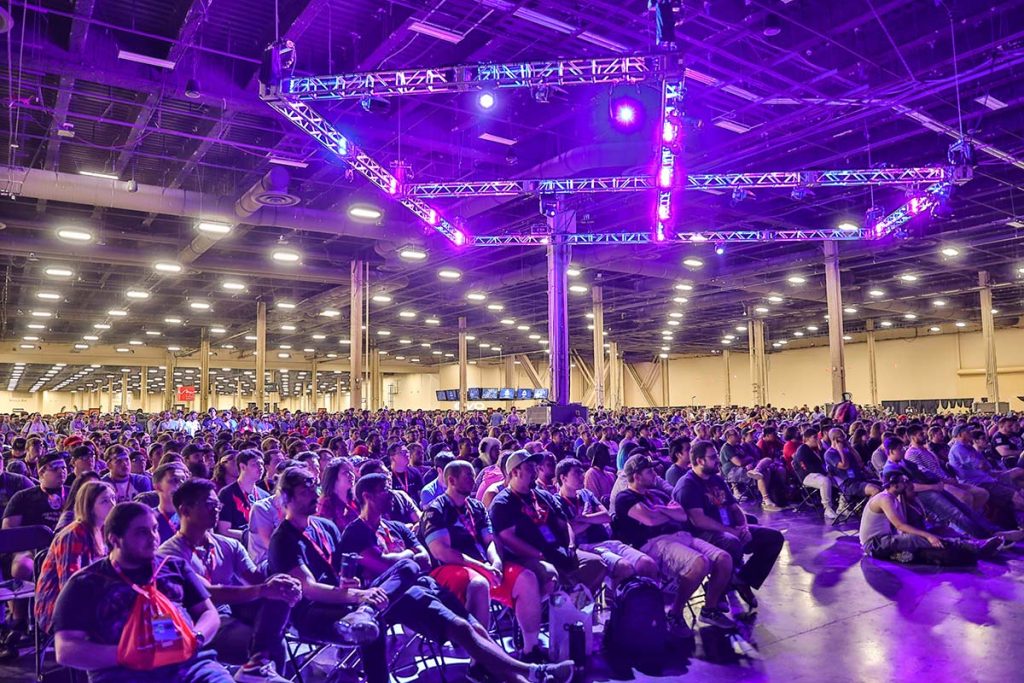
The tools you utilize will either damage or make your event photography. In my experience, events indicate photographing in reduced light situations. There are a lot of events that are done outside in the daytime also. However, the most common event photography happens indoors in less light.

This suggests you’ll require to thoroughly take into consideration the tools you bring with you. Let’s take a look at which camera body, lenses, as well as lights equipment is best.

  • Camera Body

For indoor occasion photography, you want to pack your ideal reduced light electronic camera. There are various other factors that matter but lower light capacity is among the most important.

Look for items that make less noise at greater ISO degrees, as well as more sensitive sensors. They do well in tougher illumination scenarios. Generally, electronic cameras with greater megapixel counts get the information better. But the greater the megapixel count, the bigger the documents dimension.

Make certain as a Las Vegas corporate event photographer you stock up on a big SD or compact flash card. For exterior occasion digital photography, electronic camera bodies that are fast will certainly do you marvels. Focus on the frameworks per second. And consider the cam’s weight. You’ll be lugging the equipment around for hours on end!

  • Lens(es)

The quality of the final picture is influenced by the kind of lens used. For event photography in low light, I recommend just looking at lenses with a max f/stop of 2.8. Lower is even better. Utilising a lens that decreases to f/1.8, as an example, is a terrific method to let sufficient light in, as well as make the structure bright. The broader the aperture, the more brightness enters the cam, as well as the shallower the depth of area.

Shallow deepness of field is a great stylistic option. Having one subject in focus with the rest mixing into a bokeh makes for an aesthetically pleasing, as well as simplified picture. Luxury glass, ART, prime, and this type of higher end lenses can get clearer and sharper compared other lenses. These are likewise more reliable and faster. As a basic regulation, repaired millimetre lenses often are sharper compared to lenses having a range. The drawback to dealt with is that you have zoom with your feet if you wish to change the composition.

When viewing at lenses, or even an option of lenses, think your shooting distance also.

  • Lights Equipment 

For dark occasion areas, the mobile synthetic lights you bring is important. Some photographers opt for flash while others utilise continuous light. Flashes are easy to use, as well as are the more prominent option. However, if you’re inexperienced, the light can wind up looking severe. Here’s a wonderful short article why you must prevent your on-camera flash, as well as utilise an off-camera flash rather.

Constant light is easier to utilize; however, can be a hassle or diversion to the occasion. Keep in mind if deciding what kind of lighting equipment to utilise.

  • Batteries, as well as Extra Cards 

You don’t intend to get stuck with a dead battery and/or damaged or a full SD card. Every time pack extra, as well as throwing in a battery charger isn’t a bad concept either!

Best Cam Settings for Event Photography

I have discovered that switching the camera to rupture setting, as well as constant focus works best for event photography. The burst setup is an essential when guests are stirring quickly. Continuous focus has various names depending upon the cam brand name, for example, AF-C of Nikon or AI Servo of Canon. It allows your camera to lock at your subject, as well as follow it around as it moves.

Cam settings likewise play a role in your design, or the style that the client desires.

How to Manage Your Client’s Assumptions, as well as Needs 

This is a fundamental ability for all expert photographers. Having an open discussion between yourself, as well as your client is crucial to obtaining the most effective shots. You require to ask your customers vital questions such as these:

  • What type of event is this?
  • What are the most vital minutes?
  • What sort of pictures do you want from this event? Are you trying to find headshots?
  • What do you not like?
  • What design of digital photography do you like?

Nobody wants a frustrating event photography shoot because there was miscommunication.