
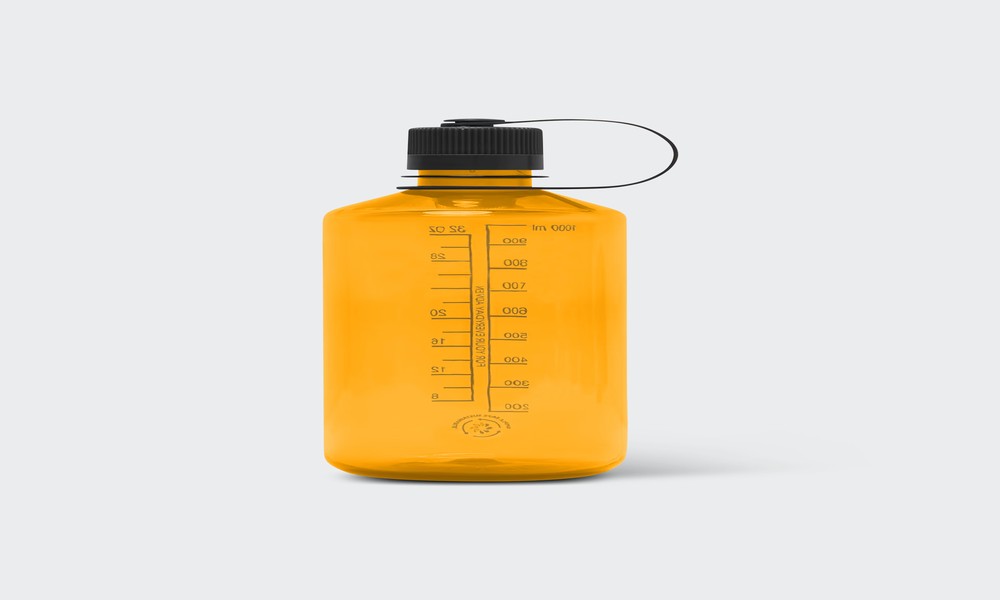
What materials are inside?
Material is what determines how a water bottle actually performs day to day. Not the shape. Not the colour. What the wall is made from decides how long it holds up, how safe it is for regular use, and how well the exterior takes customisation. Custom Nalgenes bottles use two primary materials, Tritan copolyester and HDPE, both selected for their performance across extended daily use. Tritan runs clear and lightweight with strong impact resistance that holds across years of handling. HDPE is denser, more opaque, and well-suited to heavier physical conditions. Both are BPA-free, a standard across the full range. Material choice also shapes which customisation options perform best on the exterior surface, making it a relevant consideration well beyond the purely functional side of what the bottle is built from.
What is Tritan?
Tritan copolyester is the more widely used material across the current range. Clear, light, and genuinely resistant to impact and temperature variation without clouding or cracking over time. It holds its appearance across months of daily use without picking up odours or residual flavour from previous contents, keeping the drinking experience consistent throughout.
Visually, Tritan performs well with full colour printing. Designs applied to a clear or lightly tinted Tritan surface land with accurate colour and strong contrast. For customisation projects where both surface appearance and material durability need to hold up across extended use, Tritan covers both requirements without meaningful compromise in either direction.
HDPE construction properties
HDPE delivers a different set of material strengths. The higher density produces a more rigid, opaque wall that performs well under physical stress and surface wear across demanding daily conditions.
- Holds structural form reliably under pressure and impact without deforming at stress points.
- Opaque surface works particularly well with single colour imprint and engraved customisation methods.
- Narrower mouth bottle formats within the range commonly feature HDPE construction.
- Post-consumer recycled HDPE now appears in select production runs, maintaining full functional performance throughout.
- The density of HDPE contributes to a solid, substantial feel that suits active outdoor and high-use contexts well.
For daily use situations involving rougher handling or outdoor conditions, HDPE construction holds up consistently across repeated stress without surface or structural compromise.
Sustainable material range
Sustain represents the most recent development in Nalgene material production. Resin created through recycling processes that convert post-consumer plastic waste into high-performance bottle material worth using daily.
- Carries full BPA-free and BPS-free certification matching standard Tritan and HDPE formats across the range.
- Incorporates meaningful recycled content without altering wall integrity or exterior surface finish quality.
- Accepts standard customisation processes, including screen printing and full colour imprint, reliably.
- Available across multiple size formats, making recycled material accessible regardless of daily capacity requirements.
- Produced through a process that reduces virgin plastic consumption while delivering performance equal to conventional materials.
Material selection in a Nalgene bottle shapes more than how it feels in the hand. It determines how customisation performs across the surface, how the bottle holds up across years of use, and what the production process behind it actually represents from a material standpoint.

Comments are closed.