
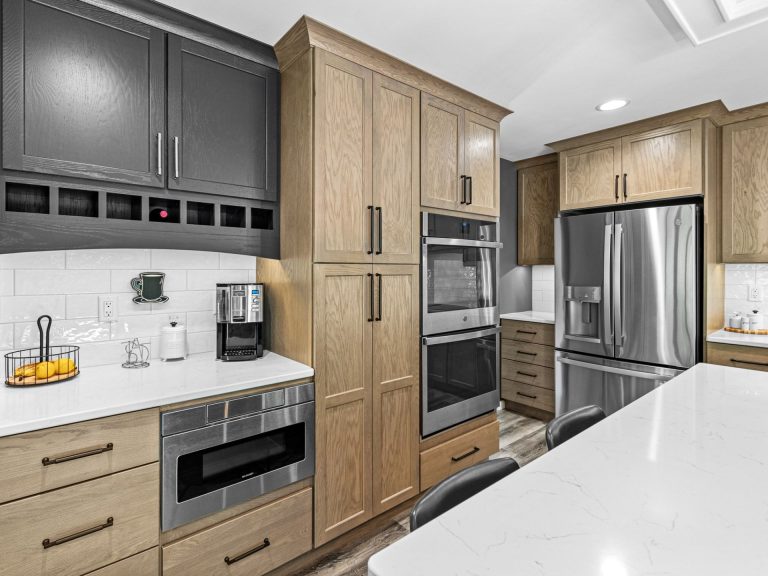
Cabinet Construction Styles Homeowners Actually Compare
Kitchen cabinets fall into a handful of construction categories, and each one changes how the finished room feels and functions. Framed cabinets use a face frame across the front of the box, which adds stability and gives installers a forgiving surface for hanging doors. Frameless cabinets, sometimes called full-access cabinets, skip that frame entirely, exposing the full opening and allowing slightly more interior storage per cabinet. Inset cabinets, a subcategory of framed construction, set the doors flush within the frame rather than overlaying it, a detail that costs more but reads as more custom.
Beyond construction method, there’s the question of material and finish. Stock cabinets come pre-built in standard sizes and are the most budget-friendly route, though they limit how much you can adjust dimensions for an odd-shaped kitchen. Semi-custom lines let you modify sizes, finishes, and some storage inserts without starting from scratch. Custom cabinetry is built to the exact measurements of a space and typically involves a cabinetmaker rather than a factory line, which raises cost but removes most compromises tied to pre-set sizing.
Matching Durability Claims to Real Kitchen Conditions
Marketing copy on cabinet finishes tends to overstate how much abuse a surface can take, so it helps to look past the sales language and think about what actually happens in a kitchen. Moisture near the sink, grease near the stove, and daily contact near handles all wear materials differently, and a finish that looks flawless in a showroom can scuff or swell within a year under the wrong conditions. Solid wood holds up well structurally but can expand and contract with humidity changes. Thermofoil and laminate resist moisture better but can peel at the edges if exposed to sustained heat.
Hardware and hinge quality matter just as much as the door material itself, even though they get far less attention during the selection process. Soft-close hinges and full-extension drawer slides cost more upfront but reduce wear on cabinet boxes over years of daily use. It’s worth asking a contractor or installer directly about the weight rating of drawer slides before assuming a lower-priced option will perform the same as a mid-tier one. Anyone handling installation personally should also plan around basic jobsite hazards, since mounting upper cabinets involves ladders, power tools, and wall anchors that carry real risk if rushed or handled carelessly.
Weighing Layout, Budget, and Long-Term Resale Value
Once the construction and material questions are settled, the decision usually comes down to how a kitchen will be used day to day and how long the owner plans to stay in the home. A young family cooking daily meals has different priorities than someone renovating a rental property on a tight budget. Reviewing the range of types of kitchen cabinets available side by side, rather than picking based on a single showroom display, tends to produce better long-term satisfaction because it forces a comparison of cost, durability, and storage flexibility at the same time.
Resale value adds another layer to the decision, since not every upgrade pays back equally when a home eventually goes on the market. Neutral finishes and timeless hardware tend to appeal to a broader range of future buyers than highly stylized or trend-driven choices. For homeowners planning to handle any part of the installation themselves, OSHA construction safety resources outline the kind of ladder, tool, and anchor precautions that apply even to smaller residential projects like a cabinet swap. Balancing what an owner wants to live with now against what a future buyer might want later is rarely a perfect formula, but it keeps the decision grounded instead of driven purely by current trends.