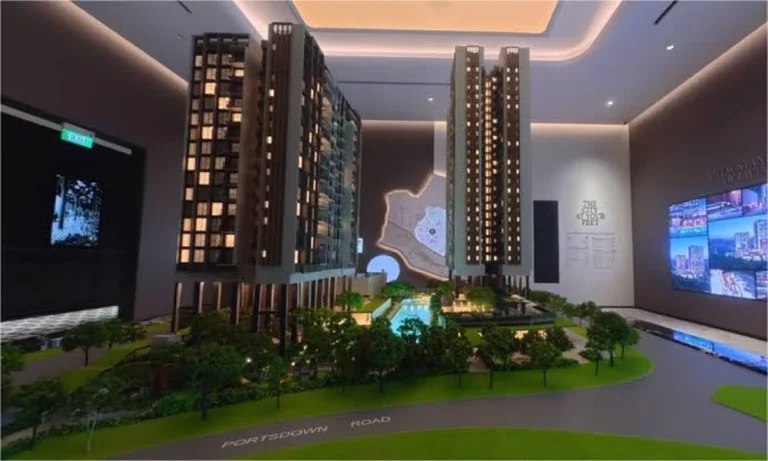
Most buyers compare projects by price, distance to the MRT and the look of the showflat. Far fewer ask a simpler question: how many neighbours will I have? A development with roughly 265 homes and one with up to 875 can feel like different worlds, even when the sales brochures use similar words. Take the planned Chencharu Central Residences in Yishun, which its website describes as having up to about 875 homes alongside commercial space, a hawker centre and a bus interchange. A project of that scale raises questions that a small scheme never faces.
Why Size Changes Daily Life
Size affects how a development behaves when people are home at the same time. Lift waits at 8am, barbecue pit bookings on Saturday, parking on a public holiday: all of these depend on how many households share the same resources. Larger projects usually offset this with more facilities, but demand for them rises too.
What Bigger Developments Tend to Offer
More facilities. A big site can support several pools, a larger clubhouse and varied recreation spaces, subject to what the developer actually builds.
Shared costs. Maintenance expenses are spread across more owners, though larger amenity packages cost more to run, so the final fee depends on the design.
A larger resale pool. More units can mean more transactions, which gives buyers comparable prices to study when they sell. This is a general observation, not a promise of value.
A built-in neighbourhood feel. Large mixed-use sites may bring shops and transport into the plan.
What Smaller Developments Tend to Offer
Quieter common areas. With fewer residents, shared spaces are less likely to be crowded.
A closer community. Neighbours are more likely to know each other, and decisions at management meetings can be easier to reach.
Lower density. More space per household is often possible when the plot ratio is modest.
Fewer facilities. The flip side is that a limited package can feel basic, and each owner carries a bigger share of whatever upkeep exists.
A Quick Comparison
| Consideration | Larger project | Smaller project |
|---|---|---|
| Facilities | Usually broader | Usually more limited |
| Crowding at peak times | More likely | Less likely |
| Sense of community | More anonymous | Often closer |
| Management complexity | Higher | Lower |
| Maintenance fee drivers | Many amenities to fund | Fewer amenities, fewer owners to share costs |
Treat the table as a starting point. Design quality matters at least as much as unit count.
Questions That Reveal the Real Picture
- How many lifts serve each block, and how many homes does each lift core support?
- How many car park lots are planned relative to the number of units?
- How many pools, function rooms and barbecue areas are there?
- How are bookings for shared facilities managed?
- What are the estimated maintenance fees, and what do they include?
When Size Meets Eligibility
Project type also shapes the choice. Private condominiums are open to a wide range of buyers, while executive condominiums come with HDB’s eligibility conditions and an occupation period. A smaller EC may suit a family that qualifies and values calm, but they should verify the rules before deciding.
That is the territory of Fablewoode Residences, the marketing name for a planned executive condominium on Sembawang Road. Its project website points to roughly 265 low-rise homes on a plot ratio of 1.4, with Canberra MRT about 0.5km away. No facilities list has been published, so what a boutique scale will deliver in practice remains to be seen. The official name, launch date, floor plans and pricing are all still to be confirmed.
Final Thought
Neither a large nor a small development is better by default. The better match is the one whose rhythm suits your household. Visit at busy hours, ask for the numbers behind the brochure and verify everything with official documents and the relevant authorities before you commit.